I stroll along serenely, with my eyes, my shoes, my rage, forgetting everything.
—Pablo Neruda
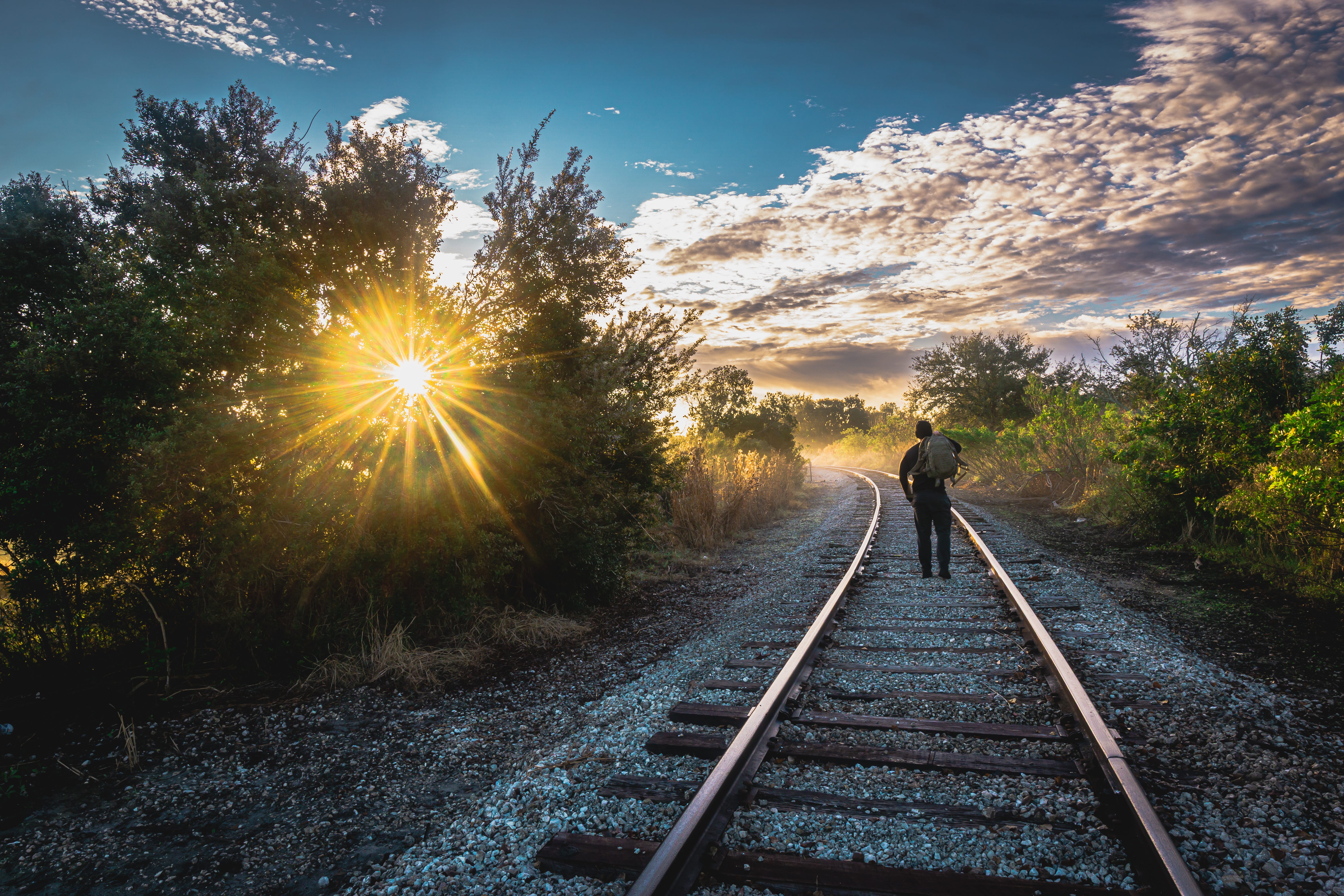
As war, chaos, idiocy, and uncertainty spread like a plague across the globe, I wake before dawn, strap on my worn boots, grab a thermos of coffee and my old rucksack, and head out into the dark. The older I get, the more I resonate with the words of Thoreau: “An early-morning walk is a blessing for the whole day.”
Strolling at ease beneath the moss-draped oaks of my neighborhood, the damp pavement, the Sunday morning stillness, the silence, the birds slowly coming alive, what serenity it all is. No noise. No bustle. No traffic. No apocalyptic headlines. Just the breeze in the trees and my footsteps click-clacking down the sad sidewalks of an unhinged world.
How this planet can be simultaneously so beautiful and yet so broken will always live unsettled in my mind. As trite as it might sound, we seem to have become insensitive to the glory of it all, to the purity of our own breath, to the essential beauty of our surroundings, which has led us down a strange, murky road as a species.
So much of the modern world has become distorted and discombobulated—a mockery of what truly matters. People feel unmoored. Time feels accelerated and fragmented. Attention spans have been shot to hell. And Community, once the staple of human existence, has been uprooted and replaced with a type of malignant digital tribalism, completely cut off from non-human nature.
The natural rhythms of life (seasons, work-rest cycles, face-to-face bonds) are overridden by 24/7 digital demands and synthetic urgencies. We don’t really LOOK at anything anymore besides screens, news stories, stock market reports, and whatever slop the algorithm feeds us at the moment.
We don’t look at the sunrise as it burns off the morning fog. We don’t watch the flowers bloom in spring or notice the rain dripping from the eaves of our dwelling. We fail to see the beauty in forgotten things and the miraculous in the ordinary.
So many of us today have become numb to the essential. Blind to the wider experience of existence. Immune to the unimaginable beauty of it all.
All at a detrimental cost.
As one writer reminds us: "Beauty matters. It is not just a subjective thing but a universal need of human beings. If we ignore this need we find ourselves in a spiritual desert."
I take a slug of coffee and walk on as I always do when my mind needs a good purging. That’s what a good walk does. The mind empties, and the senses become fully awake, and you become entirely enveloped with your surroundings. A nice, aimless ramble always feels like a momentary liberation from the world’s “dusty net.”
“Few people know how to take a walk,” Emerson tells us, “the qualifications are endurance, plain clothes, old shoes, an eye for nature, good humor, vast curiosity, good speech, good silence and nothing too much.”
I finally come upon a century-old railroad track and decide to follow it for a while as the sun rises and the fog slowly lifts. The palms and ferns are dew-drenched, and there is a fragrance of orange blossom entwined with the perfume of jasmine wafting in the air. Mary Oliver’s poetic words come to mind:
it is a serious thing
just to be alive
on this fresh morning
in this broken world.
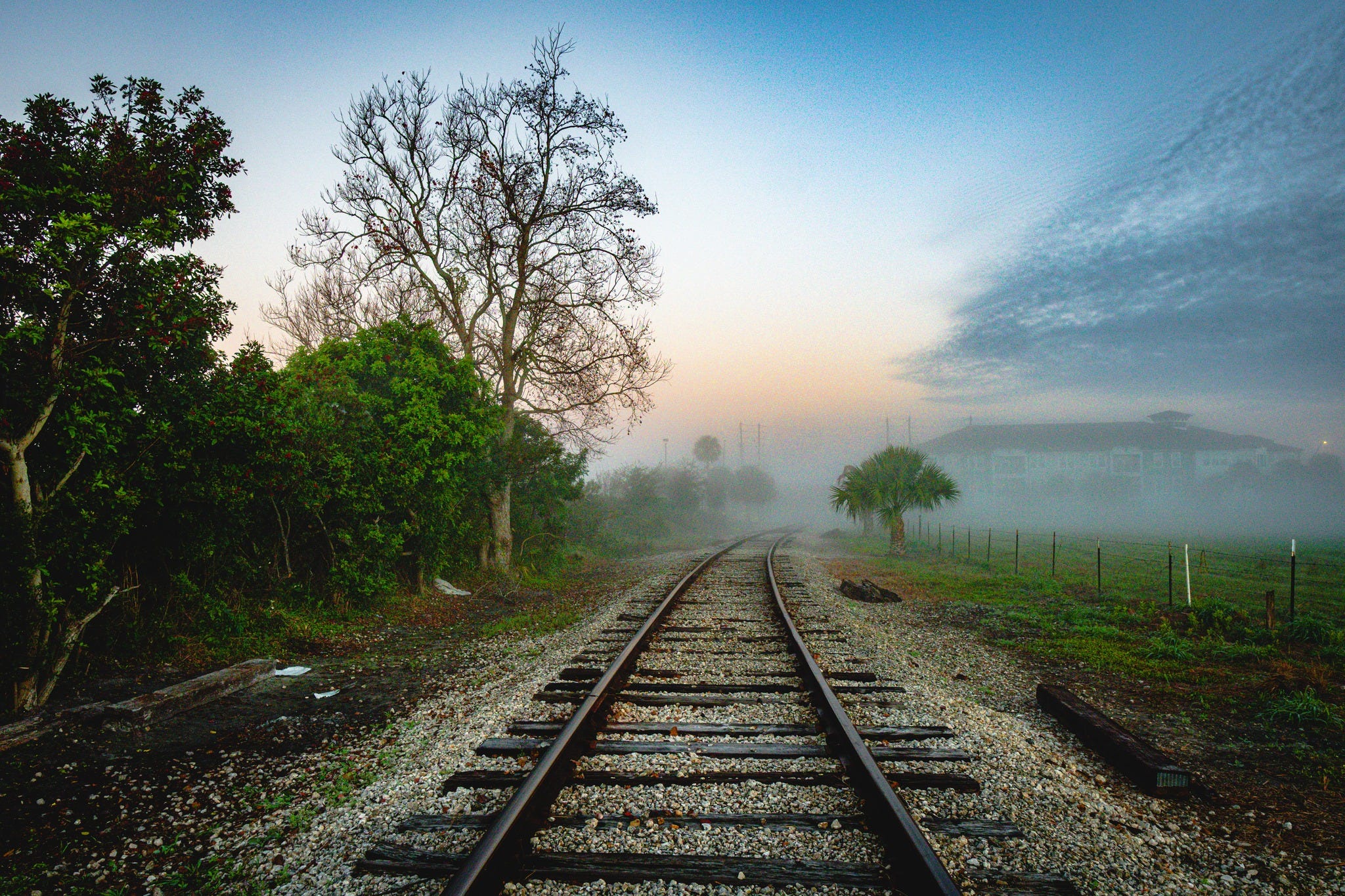
It’s springtime in the South, and on this morning, a morning that never was and never will be again, I’m just a carefree wanderer with no agenda or goal. I’m just roaming and observing, a solitary being caught between the transitory and the eternal.
There's beauty and poetry everywhere, still, in this fabricated, war-torn world we've created for ourselves. If you have the eyes to see through the reductive facade and beyond the machine, you come to realize, as Keats did, that the poetry of the earth is never dead. Despite it all.
The horrors and debauchery of our callous world, with its technological trappings and the “collective adrenaline rush” we call progress, need not infringe upon our ability to live a vital and joyful life.
I can’t help but think that if we have the grit to turn our backs on much of the profane ruckus that besieges us, we can construct a more livable way of inhabiting the world—a deeper connection with that mysterious thread that unites all life on this unforgiving planet.
It’s these early mornings full of promise that induce such lofty, optimistic sentiments. Forgive me.
But what if we can dredge up the great Romantic ideas of defiance—defiance against the matrix, against the machine, against our instrumental domination over nature? What if we could take on the mission of reharmonizing the body and mind with the natural world, as our ancestors once did?
This isn’t utopian hoopla as many might suspect. Many people have done this and are doing it throughout the world. We can’t turn back the clock, but we can go back and pick up some of the old threads that once connected us to a deeper reality—a reality that our superficial eyes seem to be unable to grasp in today’s dopamine addicted asylum.
Especially now that we are at the end of our tether.
What if in a world where digital algorithms defile our minds and the disease of ease, comfort, and convenience defile our bodies, we set out on a different path?
What if we could wipe the unholy grime from the window through which we see the world so as to get a glimpse of the transcendent that lies beyond the barbed wire perimeter of this fast-paced, transitory life?
“Most people have lost that relationship with Nature; they look at all those mountains, valleys, the streams and the thousand trees as they pass by in their cars or walk up the hills chattering, but they are too absorbed in their own problems to look and be quiet.”
— Jiddu Krishnamurti
Wordsworth once said, “With an eye made quiet by the power of harmony, and the deep power of joy, we see into the life of things.”
Emerson, the great sage of Concord, echoed these sentiments when he once so beautifully wrote: “Standing on the bare ground,--my head bathed by the blithe air and uplifted into infinite space,--all mean egotism vanishes. I become a transparent eyeball; I am nothing; I see all; the currents of the Universal Being circulate through me; I am part or parcel of God.”
Kierkegaard urged us to “die to the world” and become “nothing” before the divine— the “unseen” world beyond.
This might sound like mystical madness to my materialist friends who abhor and dispute anything beyond the calculable and measurable, but I think there is a sneaking suspicion that what we see and understand of the world is only a sliver of the whole. There’s more to life than what is presented to us.
As the poet, W.H. Auden, once said: we are lived by powers we pretend to understand.
“If the world were only pain and logic, who would want it?”—Mary Oliver
Deep down, many are awakening to a peculiar feeling that something is severely wrong in today’s world. There’s a sense of loss and a hunger to revive the lost connection between soul and the natural world. To get away from asphalt and wifi and find refuge among the forests, mountains, rivers, and seas.
This is what the great Romantic artists were pursuing through their art—a freshness of perception, an ideal of authentic human experience, unfettered by convention and the manufactured desires induced by a vulgar civilization.
They came to see that in our post-Enlightenment, cold Cartesian world, we prioritize the intellect and the conscious mind at the expense of a deeper reality beyond our limited sight. Today, we think of ourselves as “separate” beings, and place nature, in the words of Coleridge, “in antithesis to the mind, as object to subject, thing to thought, death to life.”
And it’s this misguided, materialist-driven approach to life that has contributed, at least a little, to a pathological society “of restless acquisition and accumulation”, and all the bitterness, anxiety, hatred, and strife that comes with it.
"We distrust and deny inwardly our sympathy with nature. We own and disown our relation to it, by turns. We are, like Nebuchadnezzar, dethroned, bereft of reason, and eating grass like an ox. But who can set limits to the remedial force of spirit?"
— Emerson
I finally end my walk along the lakeshore. I’ve spent many mornings here dreaming on a bench, watching the wildlife come alive. The fish splash, the lily pads glisten beneath the sun, the blue skies cradle innumerable birds that chirp and cheer despite the gloom and turmoil of the human world.
“Life consists with wildness. The most alive is the wildest,” Thoreau reminds us.
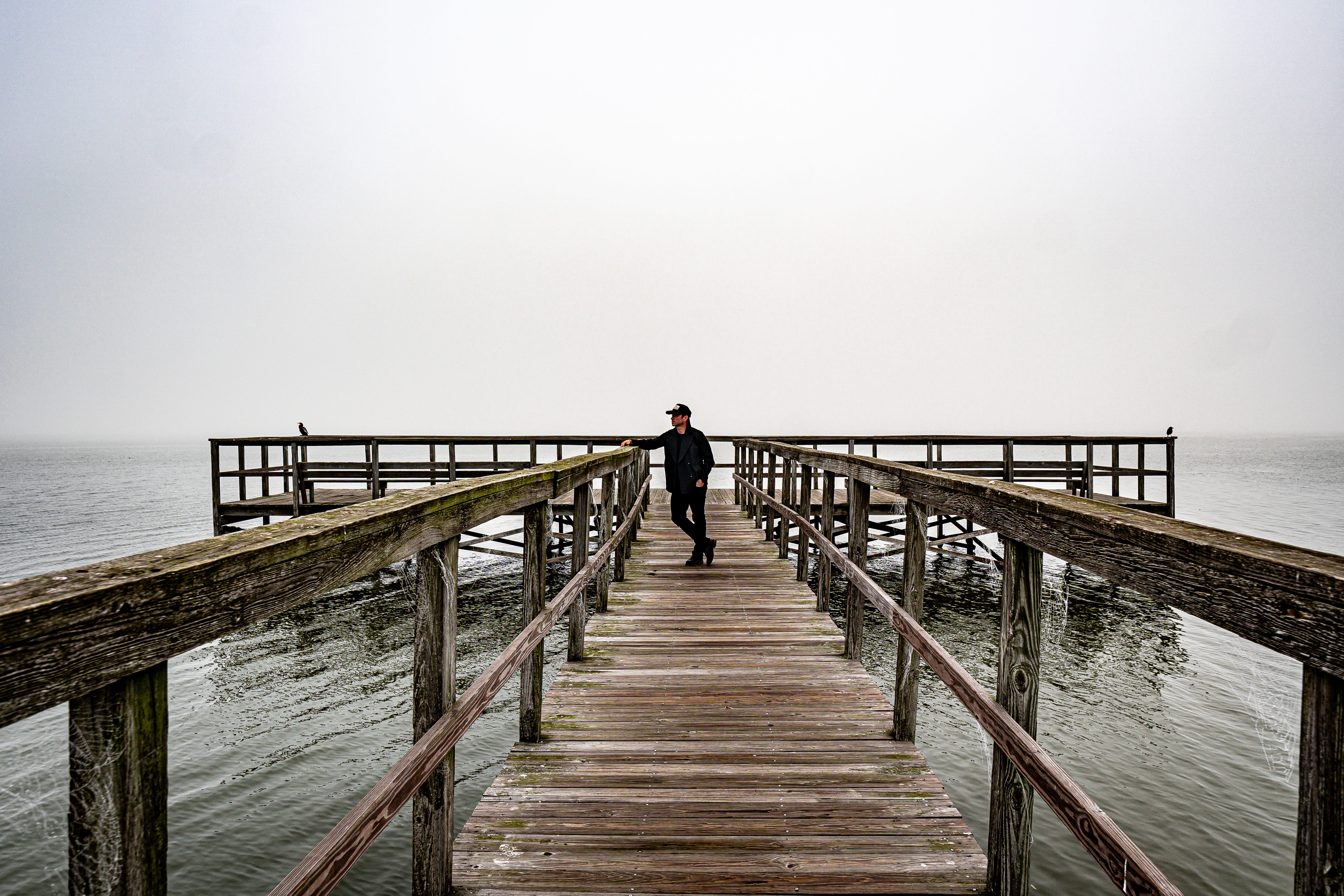
It’s a wonderful scene that always brings a little sunshine to my otherwise overcast soul. The coffee adds to the joy, and the spring breeze feels good on my face.
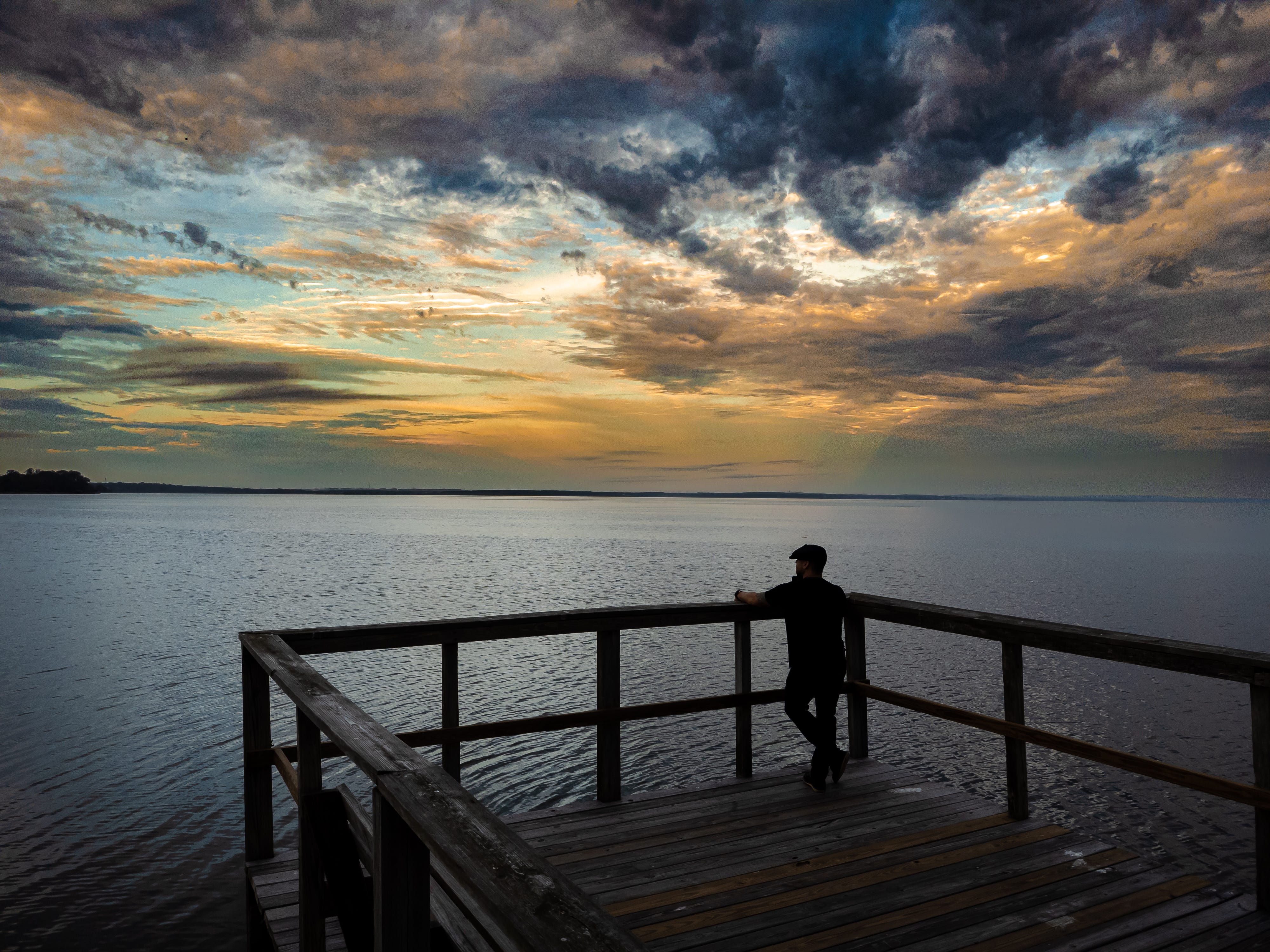
I make my way onto an old wooden dock that stretches far out into the lake. I watch as a kingfisher dives into the water. There’s a fishing boat in the distance. A lizard scurries down the railing. The hovering clouds paint shadows on the water.
Unlike our deranged human society, there’s a sublime order in the natural world. The ebb and flow of the tide as it syncs precisely with lunar cycles, Monarch butterflies migrate thousands of miles across generations to the exact same overwintering sites, and birds navigate using Earth’s magnetic field, stars, and circadian rhythms.
The earth is harmonious in its chaotic wonder, and we humans are lost and confused. And perhaps we will remain so until we can break free from the treadmill of endless consumption and our furious need to deny our impermanence.
We inhabit a marvelous earth that we were once so deeply connected to. Today, our severed relationship with the natural order is evident in the delirious way we live our lives. The way we plunder the land, our descent into mere mechanical materialism, the automatism we’ve succumbed to, our cruelty and money-obsessed antics, the loss of meaning in our daily lives, the tribal nonsense, and the constant conflict that comes with it.
Unless each one of us changes on a deeper level, the world will continue to be a dreary spectacle. It’s the old wisdom that can revive a sense of BEING in the world, a sense of wonder, a sense of place and devotion to the land, and the sustaining values of a living culture.
Live lightly, loosen your grip on the world, become more by owning less, read and implement the wisdom of the ancient saints and sages, go for long walks, get your hands in the dirt, create art, spend more time in forests and meadows, learn to appreciate the beauty of a tree instead of constantly gazing at the unhallowed glow of screens.
This is how we can at least try to offset the deprivations of a world gone mad. In the words of Krishnamurti, “Nature is the meadows, the groves, the rivers, all the marvelous earth, the trees, and the beauty of the earth. If we have no relationship with that, we shall have no relationship with each other.”
I want to end with a beautiful passage from the tragically underappreciated writer, Robert Walser, in his profound little book, The Walk. I hope you enjoy it.
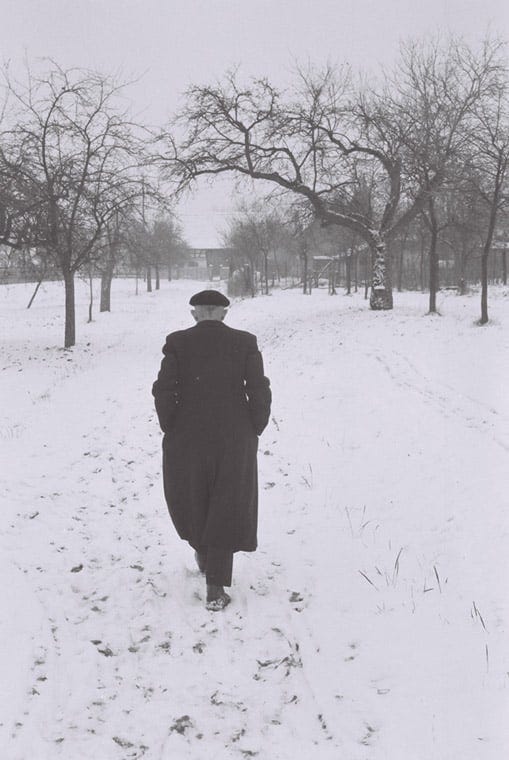
“I have to report that one fine morning, I do not know any more for sure what time it was, as the desire to take a walk came over me, I put my hat on my head, left my writing room, or room of phantoms, and ran down the stairs to hurry out into the street...
Without walking and the contemplation of nature which is connected with it, without this equally delicious and admonishing search, I deem myself lost, and I am lost.
With the utmost love and attention the man who walks must study and observe every smallest living thing, be it a child, a dog, a fly, a butterfly, a sparrow, a worm, a flower, a man, a house, a tree, a hedge, a snail, a mouse, a cloud, a hill, a leaf, or no more than a poor discarded scrap of paper on which, perhaps, a dear good child at school has written his first clumsy letters.
The highest and the lowest, the most serious and the most hilarious things are to him equally beloved, beautiful, and valuable. He must bring with him no sort of sentimentally sensitive self-love or quickness to take offense.
Unselfish and unegoistic, he must let his careful eye wander and stroll where it will; only he must be continuously able in the contemplation and observation of things to efface himself, and to put behind him, little consider, and forget like a brave, zealous, and joyfully self-immolating front-line soldier, himself, his private complaints, needs, wants, and sacrifices.
If he does not, then he walks only half attentive, with only half his spirit, and that is worth nothing.”
Thanks so for reading. Everything I write, research, and curate for this Substack is made possible by readers like you. This page is entirely reader-supported — a labor of love, kept alive by the people who find meaning in it. If you’ve been enjoying the work and aren’t quite ready to subscribe, but still want to support it in some way, you can leave a one-time tip through Buy Me a Coffee — if that’s within your reach.
Every gesture, every note of encouragement, every quiet reader who lingers here — you’ve helped turn this into something rare and luminous: a small, strange, beautiful corner of the internet. I’m deeply grateful. Thank you for being part of it.