

Learn to become poet; it’s to unlearn how to live.
—Michel Houellebecq
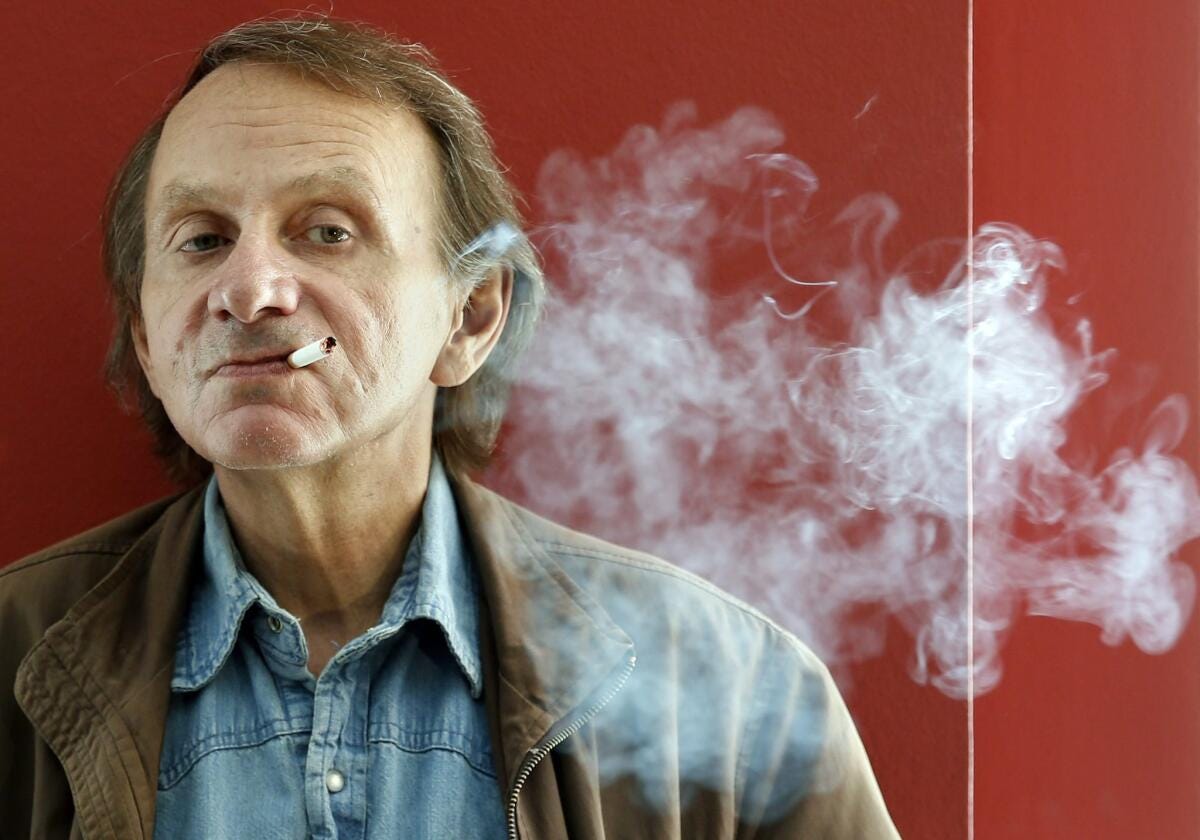
The following is a segment from a provocative 1991 essay by the French novelist and poet, Michel Houellebecq. Like Schopenhauer, Houellebecq argues that suffering is not an accidental byproduct of existence. It is existential.
“All existence is an expansion, and a crushing.”
He suggests that poetry, art, expressive language, and all true creation spring from this pain. The poet’s first task, he claims, is “to return to the origin; that is, to suffering.”
He believes, like many great artists of the past, that suffering is not to be denied or overcome neatly, but acknowledged, inhabited, and transformed into form, into art.
In short: embrace the ugly, the marginal, the painful because that is life. And instead of shying away from the hideous torrents of this world, recognize it, embrace it, and use it to create.
“Put your finger on society’s wounds and press down good and hard.”
This essay isn’t for the faint of heart. Many of you will strongly disagree with his ideas on suffering. It’s okay. For him, suffering is the source of his art—the wellspring of the creative act.
Houellebecq is a rascal, a brilliant one nonetheless. His tone is sometimes abrasive, and he never gives in to the illusion of redemption. He doesn’t offer moral comfort or naive hope. But, man, there’s a stubborn survival embedded in the writings of this bitter genius, a dogged refusal to be dulled, to be victimized, and an insistence that being alive, feeling deeply, and writing are themselves acts of resistance.
I hope you enjoy it. You might need a strong coffee for this one.