
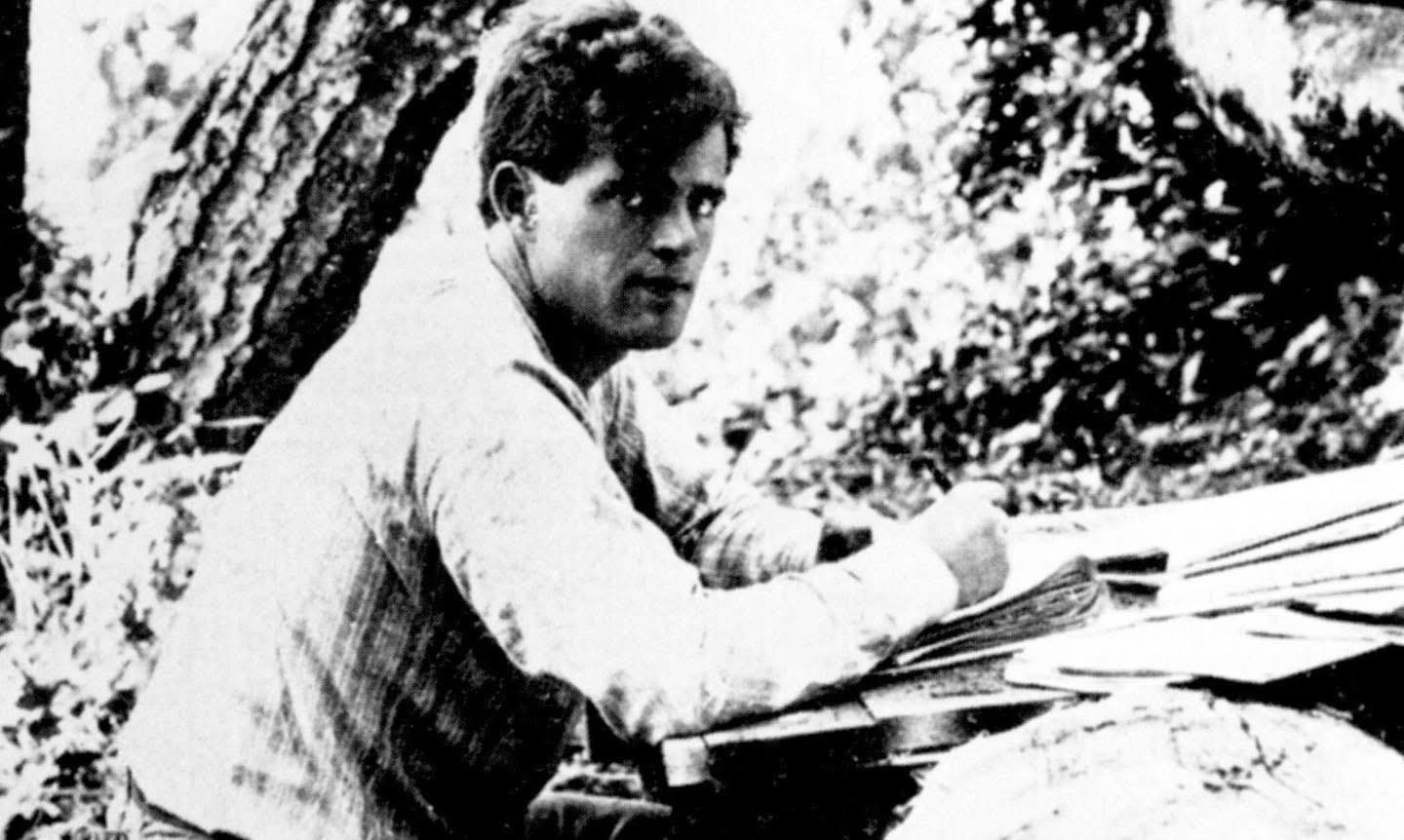
“I would rather be a superb meteor, every atom of me in magnificent glow, than a sleepy and permanent planet.”
― Jack London
There’s a passage from one of my literary heroes, Jack London, that lives rent-free in my head. It goes:
“Have you lived? What have you got to show for it? Stocks and bonds, and houses and servants–pouf! Heart and arteries and a steady hand–is that all? Have you lived merely to live? Were you afraid to die? I’d rather sing one wild song and burst my heart with it, than live a thousand years watching my digestion and being afraid of the wet.”
Have you lived?
The older I get, the more this one simple question haunts me. It nudges me to ponder what it means to be alive, madly alive, and whether I’m living in harmony with my true capabilities, especially in this bloodless age of comfort and convenience.
Many of us in today’s feverish world mistake “survival” for living. We get bogged down by status, success, careers, money, possessions—but none of this proves shit.
We spend the hours of our fleeting days indoors staring at screens. We have our food and products delivered to our front porches. We dwell in cubicles and easy chairs. But these are all just frivolous conditions of a soul-crushed culture, a mode of existence that is completely numbing us from the wildness needed to lead a well-lived life.
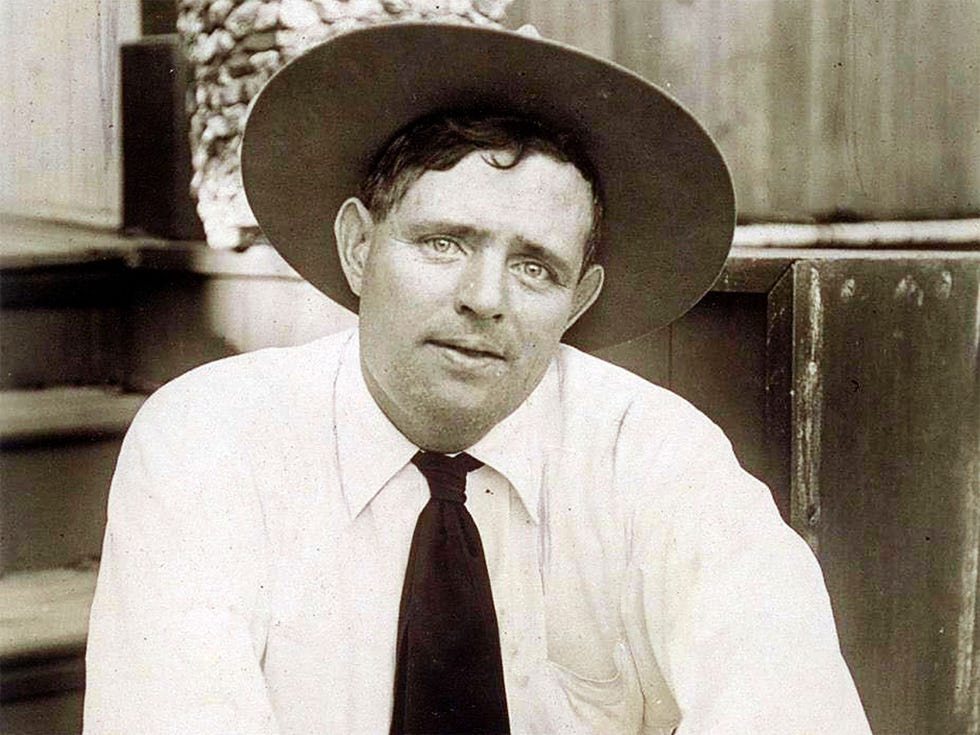
Jack London, on the contrary, pursued daring adventures rather than lethargic comforts. He chased thrills that tested his limits. He pursued his art despite poverty and hardships. He never did kneel at the altar of security or let the fear of death cause him to retreat from the very things that made him feel alive.
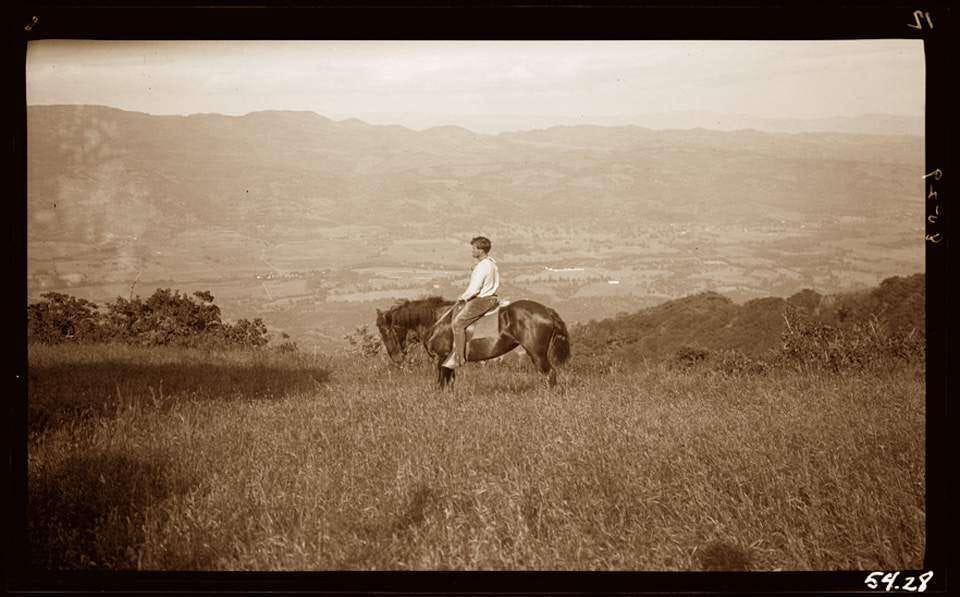
To escape the desolation of his childhood circumstances, London hurled himself into the world. He ran oysters by night, sailed a ragged old schooner across the Pacific, joined the Klondike Gold Rush in the frigid, treacherous terrain of the Arctic, and rode the rails as a hobo, learning hunger and cold firsthand.
He also worked torturous hours at a cannery, spent a month in jail for vagrancy, and was no stranger to brawling in late-night barrooms.
These early experiences not only hardened him but also gave him the creative fuel to become a fierce writer. He realized that the most vital things in life “lie in passion and in passionate expression,” and that to truly know the world and to develop one's own set of values, one has to get out there and discover it “beneath its bubbling surface.”
Jack didn’t find any appeal to the city life with its smog and machinery and senseless labor. “I am rotting here in town,” he once complained. “Really, I can feel the bourgeois fear crawling up and up and twining around me. If I don’t get out soon, I shall be emasculated. The city folk are a poor folk anyway. To hell with them.”
Later, he went on to say in a rare, sermonizing tone:
“If this is the best that civilization can do for the human, then give us howling and naked savagery. Far better to be a people of the wilderness and desert, of cave and the squatting-place, than to be a people of the machine and the Abyss.”
From this life of peril and rough ground came the force of his two most prominent works —The Call of the Wild and White Fang — making him one of the most well-known writers of the 20th century despite having no formal education.
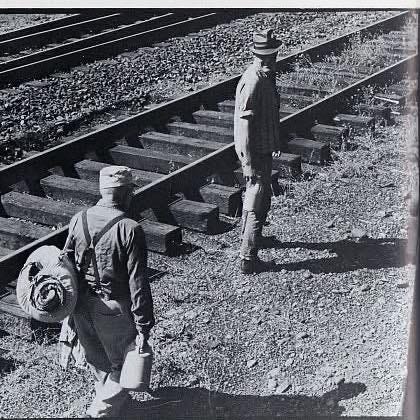
In his book, The Road, London writes about his tramping adventures across America. He laments how modern society fears the free man, the man who owns very little to nothing, the man who finds authority a ruse and refuses to be confined by social restraints.
Make no mistake, London doesn’t romanticize the hobo way of life. He writes honestly about the harrowing predicaments one faces living this kind of life and the brutal education one obtains from it.
“Perhaps the greatest charm of tramp-life is the absence of monotony. In Hobo Land the face of life is protean—an ever changing phantasmagoria, where the impossible happens and the unexpected jumps out of the bushes at every turn of the road.
The hobo never knows what is going to happen the next moment; hence, he lives only in the present moment. He has learned the futility of telic endeavor, and knows the delight of drifting along with the whimsicalities of Chance.”
By the time London entered high school, “he was light-years older in experience” than his fellow classmates. “He had sailed across the Pacific Ocean,” his biographer writes, “and tramped all the way across the North American continent. Furthermore, he had traveled in an underworld undreamt of by his adolescent schoolmates, most of whom had spent their formative years in the safe bourgeois sanctuaries of Victorian America.”
“Get up; wake up; kick in; do something; deliver the goods; come across; arise or be forever damned. Rather would I be Lucifer who told the fallen angels to arise or be forever damned, than to be one of those slack-souled angels who prefer to roast on the coals and not arise. Anybody can roast and roast; but to get up and fight requires a man.”
-- Jack London
Jack London loathed half-measures. He was all in every moment of his life. The good, the bad, the ugly-- all in. Better a shorter, fuller life than a long, safe, anemic one. To London, contentment was the enemy, and satisfaction made the spirit lame and lazy.
He writes: “Only the unsatisfied do things. The satisfied do nothing. Unsatisfaction is the stimulus to achievement. Satisfaction is destruction and leads down to the chamber of death.”
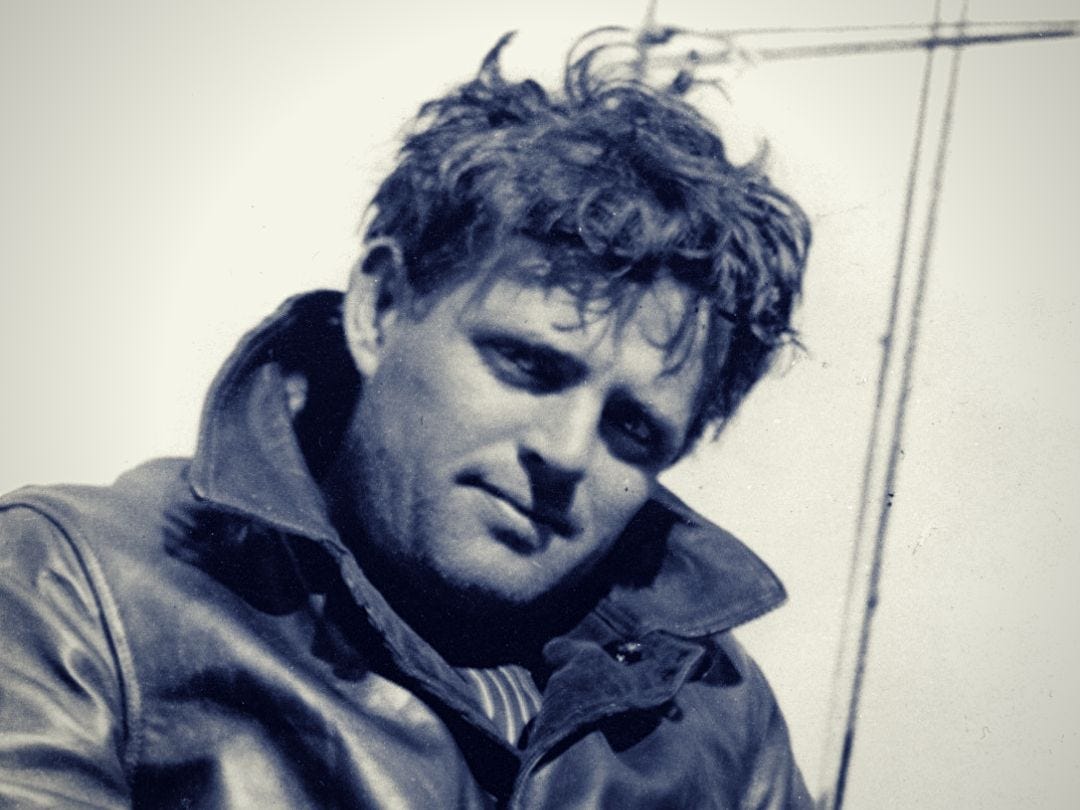
He understood more than most that the true currency of life is experience, not the trophies you compile along the way. Courage is what is so desperately needed to pursue a life of passionate endeavors. “A man without courage,” he tells us, was to him “the most despicable thing under the sun, a travesty on the whole scheme of creation.”
And despite London’s eventual so-called “success,” he despised it wholeheartedly. He thought recognition to be “dead ashes,” and once said that he’d “rather win a water-fight in the swimming pool, or remain astride a horse that is trying to get out from under me, than write the great American novel.”
For London, the greater the challenge, the greater the adventure. Towards the end of his life, in the face of financial problems and deteriorating health, his seeking spirit remained forever strong, and he continued to write.
Less than a year before his death, London penned a letter to Ethelda Hesser, reflecting on his life, perhaps knowing the end was near. He writes:
“I have had a very fortunate life, I have been luckier than many hundreds of millions of men in my generation have been lucky, and while I have suffered much, I have lived much, seen much, and felt much that has been denied to the average man. Yes, indeed, the game is worth the candle.”
Like many great souls who lived lives of radical intensity, London died young at 40 years old. The cause of his untimely death was most likely uremia, the result of advanced kidney failure. The years of hard living, heavy drinking, poor nutrition in his youth, and chronic pain finally took their toll.
London lived fast, wrote hard, and burned through himself—very much in keeping with the creed he once implied: better a short life fully lived than a long one spent shrinking from the elements.
“I would rather be ashes than dust!
I would rather that my spark should burn out
in a brilliant blaze than it should be stifled by dry-rot.
I would rather be a superb meteor, every atom
of me in magnificent glow, than a sleepy and permanent planet.
The function of man is to live, not to exist.
I shall not waste my days trying to prolong them.
I shall use my time.”
Happy New Year’s, everyone!
Everything I write, research, and curate for this Substack is made possible by readers like you. This page is entirely reader-supported — a labor of love, kept alive by the people who find meaning in it. If you’ve been enjoying the work and aren’t quite ready to subscribe, but still want to support it in some way, you can leave a one-time tip through Buy Me a Coffee — if that’s within your reach.
Every gesture, every note of encouragement, every quiet reader who lingers here — you’ve helped turn this into something rare and luminous: a small, strange, beautiful corner of the internet. I’m deeply grateful. Thank you for being part of it.